

Modern financial tools have transformed how people manage money in 2025. From budgeting apps that auto-categorize your spending to retirement calculators projecting income to age 95, these digital platforms centralize your accounts, automate tracking, and run “what-if” scenarios for major goals like retirement, home purchases, and education funding.
This guide is for individuals at any stage of their financial journey—whether you’re just starting to budget, planning for retirement, or seeking to optimize your investments.
Whether you’re paying off student loans, building wealth, or preparing for retirement, the right tools can reduce stress and help you make smarter financial decisions. This guide walks you through core categories of financial tools, how they work together, and how to choose and safely use them.
Understanding how to leverage these tools can make the difference between financial stress and financial confidence.
Key Takeaways
- Financial tools today include apps, dashboards, and calculators that help manage budgeting, investing, taxes, and retirement planning—all designed to centralize your financial life in one place.
- Modern platforms automate tracking, categorize transactions in real time, and run scenario projections for goals like retiring in 2040 or buying a home in 2027.
- Effective use of these tools can reduce financial stress, improve decision-making, and help users move toward financial independence with confidence.
- Security features like bank-level encryption, multi-factor authentication, and read-only account connections are now baseline expectations for any reputable platform.
- No single tool fits everyone—the goal is building a personal “tool stack” that matches your financial priorities and comfort level with technology.
What Is a Financial Tool Today?
A financial tool is designed to help individuals manage, analyze, and optimize their money, including budgeting, investing, and debt management.
A financial tool is any digital platform, app, or calculator that helps you manage money in concrete ways. This includes budgeting, saving, investing, handling taxes, and planning for retirement. The definition has expanded dramatically from the spreadsheet-based tracking of the 1990s and early 2000s software to today’s cloud-based dashboards and mobile apps with real-time syncing across devices.
Consider three specific examples of how these tools work in practice:
- A portfolio tracker that connects to multiple brokerages, showing your complete investment picture across your 401 k, IRA, and taxable accounts in one view
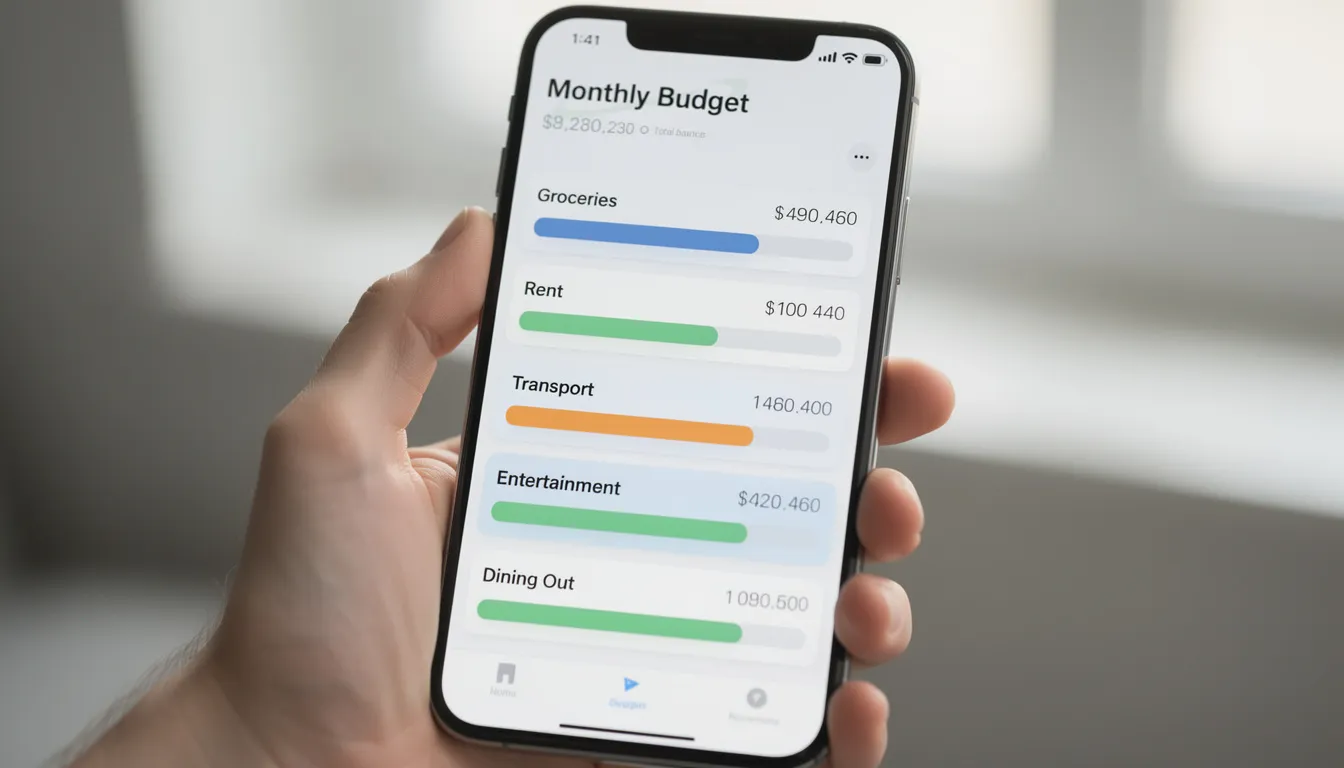
- A budgeting app that automatically categorizes your 2025 card transactions into groceries, subscriptions, and discretionary spending without manual data entry
- A retirement calculator that projects your income needs to age 95, factoring in social security benefits, inflation, and different withdrawal strategies
The distinction between single-purpose tools and integrated platforms matters here. A simple loan calculator helps you understand a monthly payment for a specific debt. An integrated platform combines budgeting, investing, tax planning, and retirement modeling under one login, showing how decisions in one area affect others.
No single tool is perfect for everyone. The goal is building a personal “tool stack” that fits your financial life and comfort with technology. Some people thrive with a comprehensive all-in-one platform. Others prefer specialized tools for each need.

Financial Freedom Starts With the Right Tools
Financial freedom begins with visibility. Before you can make confident decisions about your money, you need a clear view of your income, spending, debts, and investments. Most people have accounts scattered across multiple banks, brokerages, and credit cards—making it nearly impossible to see the full picture without help.
An integrated financial dashboard solves this problem by centralizing your checking account, savings, credit cards, loans, and investment accounts under one login. Instead of logging into five different websites and mentally adding up your finances, you see everything in one place. This cuts through confusion and reveals patterns you’d otherwise miss.
Scenario-planning tools take this further by letting you test specific goals. Want to know if you can retire in 2038 instead of 2042? Curious how buying a home in 2027 affects your long-term plan? These tools let you adjust variables—savings rate, expected investment returns, retirement age—and see how changes ripple through your detailed plan over decades.
Many modern tools include guidance layers that translate raw data into actionable recommendations:
- Goal-based suggestions that prioritize debt payoff versus investing based on interest rates
- Alert systems that flag overspending trends or missed contributions to retirement accounts
- Optional access to a human advisor or coach for complex decisions
The combination of visibility, scenario testing, and guidance helps users create what amounts to a life plan—a coordinated strategy that connects daily spending choices to long-term goals.
A Less Stressful Tax Season With Digital Tax Tools
Tax season—January through April in the U.S.—represents one of the most practical use cases for financial tools. With more people investing in taxable accounts, running side gigs, and managing complex income streams, the stakes of getting taxes right have never been higher. The wrong approach can mean overpaying or missing deductions worth hundreds or thousands of dollars.
Connecting your bank and brokerage accounts to tax software can automatically import 1099s, W-2s, and transaction histories for the 2024 tax year filed in 2025. This eliminates hours of manual data entry and reduces errors that trigger audits. When your tax planning is embedded in or connected to a broader financial dashboard, you can see how realizing capital gains in 2025 affects your long-term plan and net worth trajectory—not just your immediate tax bill.
Modern tax planning tools offer capabilities that go far beyond basic filing, and business owners or high-income households may also need specialized resources such as advanced tax planning for high-net-worth individuals, a detailed guide to filing your company tax return accurately, insight into why tax planning fails without financial forecasting, comprehensive advanced tax planning with strategic bookkeeping support, or reviews of the top small business tax software solutions for 2024:
- Estimating quarterly taxes for freelancers and self-employed workers based on real-time income tracking
- Modeling Roth versus Traditional IRA contributions to optimize your tax strategy across decades
- Tracking tax-loss harvesting opportunities during volatile markets to offset gains with strategic losses
Common user scenarios:
- A first-time filer uses integrated tools to ensure they claim education credits and standard deductions correctly
- A self-employed worker relies on quarterly estimates and expense categorization to prepare for April without surprises
- An active investor tracks cost basis and holding periods across multiple accounts to minimize capital gains taxes
Note that these tools provide important information and calculations, but they don’t replace professional tax advice for complex situations. The securities and exchange commission and IRS have specific rules that may require expert guidance.
Get Real Answers: Human Support Behind the Tools
Even the best software can’t fully replace personalized advice—especially for decisions that involve trade-offs across multiple life factors. When should you claim social security? How much life insurance makes sense for your family? Is your 75/25 stock/bond mix too aggressive if you’re planning to retire in 2030?
These questions require context that algorithms can’t always capture. That’s why many financial platforms now layer human support on top of their tools:
- In-app chat with licensed investment professionals who can answer specific money questions
- Scheduled video calls with certified financial planners for in-depth strategy sessions
- Email support for non-urgent questions about account features or calculations
- Live “office hours” Q&A sessions where users can get guidance on common challenges
Good human support focuses on education and clarity—not product sales. An advisor should help you understand trade-offs: risk versus return, paying taxes now versus later, accelerating debt payoff versus investing. The goal is helping you make smarter decisions, not pushing you toward a particular product.
Consider a couple in their 40s who use planning tools to track their retirement projections. The tools suggest they’re on track, but they have competing priorities: saving for their children’s education while maximizing their own employer sponsored plan contributions. A 30-minute call with an advisor helps them see that prioritizing the 401 k match makes sense mathematically—since their children can take loans for college, but they can’t take loans for retirement.
Simplify Your Finances With Smart Money Tools
“Smart” money tools use rules, reminders, and sometimes AI-driven insights to make day-to-day management less manual and error-prone. On the business side, building scalable startup financial systems and understanding how CFOs use AI and automation in finance show how similar principles apply at company scale. Rather than requiring you to log in daily and manually track everything, these tools work in the background—surfacing what matters and hiding what doesn’t.
Budgeting and cash-flow tools automatically categorize transactions (groceries, rent, subscriptions) and flag patterns you might miss. For entrepreneurs and small business owners, dedicated cash flow software for entrepreneurs and resources on mastering budgeting and forecasting for small businesses can complement personal finance tools, while individuals can use frameworks like budget prioritization in 2025 to decide where their money should go first. Did your streaming services increase by $15 this month? Are you spending 40% more on dining out than last quarter? These insights appear without you digging through statements.
Portfolio-mix tools break your investments into concrete categories—U.S. stocks, international stocks, bonds, cash, real estate—and show how that mix compares with age-based or goal-based targets. If your target allocation is 70% stocks and 30% bonds, but market movements have pushed you to 80/20, the tool flags the drift and may suggest rebalancing strategies.
The real power comes when these tools translate raw data into specific actions. Rather than showing you a wall of numbers, they recommend next steps:
- “Your emergency fund covers only 2.1 months of expenses. Consider increasing automatic transfers by $200/month to reach 3 months by August 2025.”
- “You received a 4% raise last quarter but haven’t increased your 401(k) contribution. Adding 2% would cost $85/paycheck and could add $180,000 to your retirement by 2045.”
- “Your portfolio has drifted 8% from your target allocation. Review whether rebalancing aligns with your risk tolerance and investment strategy.”
- “You have 3 unused subscriptions totaling $47/month. Canceling them would free $564/year for savings or debt payoff.”
Core Categories of Financial Tools
Financial tools fall into several major categories that work best when combined into a coordinated system. Understanding each category helps you build a toolkit that covers your needs without redundancy.
The following sections break down four core areas: portfolio analysis, retirement planning, budgeting and cash flow, and net worth tracking. You can skip to the tools most relevant to your situation, but keep in mind that improving one area—like budgeting—typically strengthens others, like retirement saving.
Portfolio Analysis Tools
Portfolio analysis tools aggregate all your investment accounts—401(k)s, IRAs, taxable brokerage accounts—from multiple providers into a single view. This is critical because most people accumulate accounts over time: an old 401 k from a previous employer, a Roth IRA at one brokerage, a taxable account at another.
These tools typically display key metrics that help you evaluate whether your investments align with your goals:
- Asset allocation percentages: How much is in stocks versus bonds versus cash?
- Sector and geographic exposure: Are you overweight in technology stocks or underweight in international markets?
- Historical performance versus benchmarks: How have your returns compared to broad market indices?
- Volatility and risk measures: How much does your portfolio swing during market downturns?
The real value emerges when these tools reveal problems you didn’t know existed. Maybe 90% of your retirement savings sits in U.S. large-cap stocks because that’s what your default settings selected years ago. Or perhaps you hold significant company stock from equity compensation, creating concentration risk that could devastate your wealth if that company struggles.
Consider this scenario: A user in 2025 reviews their portfolio dashboard and discovers 85% of their retirement assets are in domestic equities. The tool recommends diversifying into international stocks, bonds, and real estate over 6–12 months. By following a systematic rebalancing plan, they reduce risk without trying to time markets.
These tools remind users that investing involves risk, and that past performance doesn’t guarantee future returns. However, having visibility into your actual allocation—rather than guessing—helps you make intentional decisions about your money.
Retirement Planning Tools
Retirement planning tools are long-horizon simulators that project income, expenses, savings, and withdrawals year by year—often out to ages 90–95. Unlike simple calculators, these platforms model complex scenarios and show probability ranges rather than single-point estimates.
Typical inputs include:
- Current age and planned retirement age
- Current savings rate and expected increases after raises
- Existing portfolio balance as of 2025
- Expected social security benefits based on earnings history
- Major one-time expenses (college funding, home purchase, healthcare costs)
- Assumed investment returns and inflation rates
The power comes from scenario testing. What happens if you delay retirement from 65 to 68? How does increasing your savings rate by 2% of salary change outcomes? What if you downsize your home in 2035 and invest the proceeds?
Advanced features in these tools can transform retirement planning:
- Social Security optimization: MaxiFi calculates the best claiming strategy based on your specific situation—whether to claim early, delay to 70, or coordinate with a spouse
- Roth conversion testing: Model converting Traditional IRA funds to Roth between 2025 and 2030 to see how paying taxes now affects your after-tax retirement income
- Safe withdrawal-rate estimates: See how much you can spend each year without running out of funds, adjusted for market conditions and your specific portfolio
Consider a couple planning to retire in 2040. Their current plan shows an 85% probability of not running out of money by age 95. But the tool reveals that increasing contributions by $500/month and delaying retirement by two years pushes that probability to 97%. They can now make an informed decision about whether the trade-off is worth it.
Remember that all projections involve assumptions about future returns, inflation, and expenses. These are illustrative purposes only—actual results will vary.
Budgeting & Cash-Flow Tools
Budgeting tools connect to bank and credit card accounts to automatically track and categorize income and spending across months and years. This eliminates the tedious manual tracking that causes most people to abandon budgets within weeks.
Real-time cash-flow views—daily, weekly, monthly—help you avoid overdrafts, understand your “true” discretionary spending after fixed expenses, and prioritize savings before nonessential purchases hit your account.
Key features to look for include:
- Custom categories that match how you actually think about spending (not generic labels)
- Envelope-style budgeting that allocates specific amounts to categories each month
- Alerts when you exceed category limits or approach unusual spending patterns
- Monthly and annual reports showing how spending changes over time
A practical example: Someone reviews their January 2025 spending and discovers they’re paying $47/month for three subscriptions they never use, plus $180/month in “miscellaneous” purchases they can’t remember. By canceling the subscriptions and becoming more intentional about small purchases, they free up $227/month—nearly $2,700/year—to redirect toward an emergency fund or Roth IRA contributions.
Small, automated habits make the biggest difference. Setting up automatic transfers on each payday—before you have a chance to spend the money—is easier to maintain when tools handle reminders and execution. The money moves to savings or investments before it ever feels available for expenses.
Net Worth Tracking Tools
Net worth tracking tools calculate your total assets (cash, investments, home equity, other property) minus liabilities (mortgage, student loans, car loans, credit card balances) in real time. This single number provides the clearest picture of your overall financial health.
Why track net worth instead of just income or individual account balances? Because net worth captures the full picture. You might earn a high salary but have negative net worth due to debt. Or you might have modest income but substantial wealth from disciplined saving and investing over time.
Features that matter in net worth trackers:
- Visual charts showing net worth growth over time (e.g., from 2020 to 2025)
- Breakdowns by asset type and debt type so you see where wealth is concentrated
- Scenario modeling to see how paying off a specific loan by a target date affects overall net worth
- Automatic updates as account balances change
Interpreting short-term volatility matters here. Your net worth will dip when markets decline—that’s normal. What matters is the trend over multiple years. A 10% drop in one quarter is less meaningful than steady growth from $50,000 to $300,000 over a decade.
Setting net worth milestones helps maintain motivation:
- First milestone: reaching $0 net worth (assets equal liabilities)
- Second milestone: $25,000 or one year of expenses
- Third milestone: $100,000—a major psychological threshold
- Long-term milestones: $500,000, $1 million, or your specific “financial independence number”
Tracking progress toward these milestones keeps your savings rate high and helps you compare where you are versus where you planned to be.

Security, Privacy, and Risk When Using Financial Tools
Any tool handling login credentials, transaction data, or account balances must meet strict security and privacy standards. Before connecting your accounts, verify that a platform takes protection seriously.
Essential safeguards to look for:
- Bank-level encryption (typically 256-bit AES) protecting data in transit and at rest
- Multi-factor authentication requiring a second verification step beyond your password
- Read-only connections to external accounts, meaning the tool can view but not move your money
- Regular security audits or certifications from third-party security firms
Privacy considerations matter equally. Read the data-use policies before connecting accounts. Does the provider sell anonymized data to advertisers? How long is your information stored? Can you delete your data completely if you leave the platform?
Understand that while tools support better decisions, investing always involves risk. Market-return assumptions in projections are estimates—not guarantees. Past performance doesn’t predict future results. You can lose money even with the best planning tools if markets decline or your assumptions prove wrong.
Practical security habits strengthen your protection:
- Use a password manager to create strong, unique passwords for every financial account
- Enable transaction alerts from banks and brokerages to catch unusual activity quickly
- Avoid accessing financial tools on shared or public devices
- Be cautious with emails claiming to be from financial institutions—verify by logging in directly, never through email links
- Keep your devices and apps updated with the latest security patches
How to Choose and Use Financial Tools Effectively
The variety of apps and platforms available in 2025 can feel overwhelming. A simple selection process helps you avoid analysis paralysis and actually get started.
Step-by-step decision framework:
- Define your top 2–3 financial priorities (debt payoff, retirement saving, emergency fund, education funding)
- Choose 1–2 tools per category to test—don’t sign up for more apps than you’ll realistically use weekly
- Start with free trials where available before committing to paid subscriptions
- Give each tool 30 days before deciding if it fits your workflow
Evaluation criteria that matter:
Criteria | Questions to Ask |
|---|---|
Cost | Is it free? What does the subscription cost? Are there fees for premium features? |
Ease of use | Can you connect accounts in under 10 minutes? Is the interface intuitive? |
Quality of reports | Does it surface insights you’d miss on your own? |
Integration | Does it connect with your existing banks, brokerages, and credit cards? |
Human support | Can you reach someone if you get stuck? Is there live help or just FAQs? |
A simple 30-day getting started plan: |
- Week 1: Connect accounts and clean up categories. Make sure transactions are categorized correctly.
- Week 2: Review spending patterns. Where is money actually going versus where you thought?
- Week 3: Run 1–2 retirement or savings scenarios. What does your current trajectory look like?
- Week 4: Adjust contributions and set up automation. Increase 401(k) deferrals, set up automatic transfers to savings.
Review your setup at least twice a year—January and July work well for many people. Update goals, adjust for income changes, and account for major life events like marriage, new children, home purchases, or job changes. What worked in 2024 may need adjustment for 2025.
FAQ
The following questions address common concerns about financial tools that aren’t fully covered in the main sections above. Each answer focuses on practical, real-world guidance.
Are financial tools safe to connect to my bank and investment accounts?
Reputable tools use strong encryption, tokenized connections, and multi-factor authentication. Critically, they typically use read-only access—meaning they can see your data but cannot move money or execute transactions. This limits risk even if a breach occurred.
Before connecting accounts, verify that a provider uses HTTPS, publicly lists their security practices, and allows read-only access. Enable transaction alerts from your banks and brokerages so you’re notified immediately of any new logins or unusual activity. Use a password manager to create unique, strong passwords for all financial accounts.
No system is 100% risk-free. However, choosing well-known providers, keeping software updated, and being cautious with phishing emails significantly reduces your exposure. The convenience and insights gained typically outweigh the risks when proper precautions are in place.
Do I still need a financial advisor if I use advanced financial tools?
Many people successfully manage their finances with tools alone, especially in straightforward situations like early-career saving or basic debt payoff. If your financial picture is relatively simple—steady income, standard accounts, no major complexities—you may not need ongoing advisory services.
However, a human advisor adds value when situations become complex. Business ownership, large inheritances, divorce, significant tax questions, or coordinating multiple goals (education funding plus retirement plus caring for aging parents) benefit from personalized guidance. The securities and exchange commission provides resources for finding registered advisors.
A hybrid approach often works best: use tools for daily tracking, projections, and routine decisions, then schedule periodic check-ins with an advisor for big-picture strategy or major life transitions. The choice depends on your comfort level, time available, and the stakes of the decisions you’re making.
How much should I expect to pay for good financial tools?
Many budgeting apps and basic portfolio dashboards are free, funded through ads, referral programs, or optional premium tiers. These free options serve most people well for basic needs.
Advanced planning tools with retirement projections, tax optimization, and scenario modeling often charge annual subscriptions ranging from $50 to $500+ per year depending on features. Advisor-managed platforms may bundle software with asset-based fees (typically 0.25% to 1% of assets annually).
Start with free trials where available. Assess whether the tool provides genuine value over a full month before committing. Avoid long-term contracts unless the tool clearly fits your needs. Include any subscription costs in your budget and weigh them against potential benefits—the tax savings or improved investment decision from a planning tool might far exceed its fees.
What if my bank or brokerage doesn’t integrate well with a financial tool?
Some smaller institutions, credit unions, or newer fintechs may not yet support seamless data connections to all tools. This is frustrating but manageable.
Workarounds include manual CSV uploads of transactions (most banks allow downloading statement data), periodic manual balance updates for those specific accounts, or using the institution’s own exports combined with spreadsheet-based tracking. Some tools also support manual account entries where you update balances monthly.
Contact both the tool’s support team and your bank’s customer service to ask about upcoming integrations or alternative connection methods. Prioritize tools that cover the majority of your accounts, and accept that a few smaller accounts may remain partially manual for now. Most tools handle 80–90% of accounts seamlessly, and the remaining manual work is usually minimal.
How often should I log in and review my financial tools?
A sustainable rhythm looks like this: brief weekly check-ins (10–15 minutes) to review spending and cash flow, with deeper monthly or quarterly reviews for investments and long-term goals. This balance keeps you informed without becoming obsessive.
Logging in daily to watch market swings is counterproductive for most people—it creates anxiety and tempts emotional decisions. Conversely, going 6+ months without checking can let problems accumulate: overspending trends, missed contributions, or drift in your portfolio allocation.
Set calendar reminders to build consistency. A “money Monday” each week for quick spending reviews and a quarterly “financial review” session for bigger-picture planning works well for many people. Consistency—even in short sessions—matters more than intensity for building long-term financial progress with these tools.
Can I use financial tools if I move to a different state?
Yes, many financial tools allow you to update your location to reflect a move to a different state. This is important because state taxes, cost of living, and other financial factors can vary significantly. By updating your state, the tools can more accurately determine your tax obligations, adjust retirement planning projections, and provide guidance tailored to your new financial environment. Always check that your chosen financial tool supports location changes to ensure your financial plan remains relevant and accurate.