

The days of requiring a chief financial officer to occupy a corner office are over. In 2026, a growing number of founders and CEOs are discovering that strategic financial leadership can be delivered from anywhere in the world—without sacrificing clarity, accountability, or performance.
This guide is for founders, CEOs, and business owners considering remote CFO solutions for their growing companies. As businesses scale and embrace distributed work, knowing how to leverage remote CFO expertise can be a key driver of sustainable growth and financial clarity.
A remote CFO brings the same strategic firepower as a traditional finance executive, but through digital collaboration tools, secure cloud systems, and modern communication platforms. Whether you’re a startup seeking your first institutional capital raise or a PE-backed company preparing for an exit, understanding how to engage and partner with a remote CFO can be the difference between confident growth and financial chaos.
Benefits of Hiring a Remote CFO
Hiring a remote CFO offers a range of advantages for growing businesses:
- Significant Cost Savings: Businesses pay 40% to 60% less for remote CFO services compared to a full-time hire, avoiding costs like benefits and office space.
- Access to High-Level Expertise Without Full-Time Cost: Fractional CFOs allow businesses to access high-level financial expertise without the cost of a full-time executive.
- Flexible Engagement Models: Remote CFOs offer flexible engagement models that can be scaled based on business growth, with variable costs depending on hours or specific projects.
- Use of Advanced Cloud-Based Tools: Remote CFOs utilize advanced, cloud-based accounting and forecasting tools to streamline financial operations.
- Unbiased Financial Insights: They provide unbiased insights and financial analysis to guide company decision-making without being influenced by internal politics.
- Support for Long-Range Planning and Sustainability: Engaging a remote or fractional CFO can support long-range financial planning and sustainability for businesses.
Key Takeaways
- A remote CFO is a chief financial officer who delivers strategic financial leadership—including financial planning, forecasting, and risk management—without being physically present at your office
- Remote CFOs typically save businesses 40-60% compared to full-time in-house hires while providing comparable or enhanced strategic value
- Hourly rates for fractional remote CFOs range from $100-$125+ per hour, while full-time remote CFO salaries span $250,000-$400,000+ for venture-backed companies
- The right time to hire a remote CFO is typically at $1M-$5M ARR, before a major funding round, or when operational complexity outpaces your current finance team’s capabilities
- Success with a remote CFO depends on clear communication, structured onboarding, and measurable goals established within the first 90 days
What Is a Remote CFO?
A remote CFO is a chief financial officer who works off-site, providing strategic finance, forecasting, and executive support via digital tools. Rather than sitting in your office daily, they lead your financial operations from a home office, co-working space, or any location with a reliable internet connection.
The terms “remote CFO,” “fractional CFO,” “virtual CFO,” and “outsourced CFO” often overlap in practice. The core idea remains the same: strategic leadership delivered without the full time, on-premise presence of a traditional finance director. The distinction typically comes down to engagement structure—fractional usually implies part time across multiple clients, while a full time remote CFO serves one company exclusively. Fractional CFOs allow businesses to access high-level financial expertise without the cost of a full-time executive, and remote CFO roles can vary in terms of job type, including part-time, contract, and full-time positions. Remote CFOs can simultaneously manage multiple clients, providing cost-effective financial leadership for SMEs and startups.
Remote CFOs typically support B2B and B2C founders, PE-backed companies, and growth-stage startups from pre-revenue through $100M+ in annual revenue. They bring specialized skills and industry expertise that would be difficult or expensive to find locally, tapping into a global talent pool that removes geographical limits.
How finance roles compare: For founders deciding between strengthening their controller function or bringing on a CFO, resources like How do remote CFOs maintain company culture and team engagement?
Remote CFOs prioritize clear communication and regular interaction to foster a strong culture despite physical distance. They participate in leadership meetings, encourage collaboration through digital platforms, and invest time in understanding team dynamics. By aligning financial goals with company values and promoting transparency, remote CFOs help maintain accountability and a shared mindset, ensuring that financial discipline supports a positive and productive organizational culture.CFO vs Controller: understanding the key differences for your business and signs it’s time to hire a CFO over a controller can clarify when strategic finance leadership becomes necessary.
Role | Primary Focus | Typical Tasks |
|---|---|---|
Bookkeeper | Transactional | Data entry, categorization, bank reconciliation |
Financial Controller | Reporting and controls | Monthly close, financial statements, compliance |
CFO | Strategy and capital | Long-range planning, fundraising, board support |
Common remote CFO engagements last 12-36 months, typically starting with a 60-90 day diagnostic phase where they assess your current financial infrastructure, identify gaps, and develop a prioritized roadmap. |
Key Skills and Qualifications for Remote CFOs
To be effective, remote CFOs should possess the following skills and background:
- Strong Finance and Accounting Background: Remote CFOs typically require a solid foundation in finance and accounting.
- Leadership Experience: Many remote CFO positions prefer candidates with leadership experience in financial strategy and planning.
- Analytical Skills: Remote CFOs should possess strong analytical skills to interpret financial data and make strategic decisions.
- Effective Communication: Communication skills are essential for conveying financial insights to stakeholders.
- Adaptability and Tech Savvy: Remote CFOs often need to be adaptable and comfortable with technology to manage remote teams and financial systems.
- Proven Track Record: A successful remote CFO should have a proven track record of financial management and strategic planning.
Core Responsibilities of a Remote CFO
Remote CFOs go far beyond accounting. They own financial strategy, decision support, and risk management—serving as a trusted advisor to the CEO and the broader executive leadership team.
Strategic Finance Duties
- Building 3-5 year financial models with scenario planning for multiple growth paths
- Capital allocation decisions and investment prioritization
- Pricing strategy development and optimization
- Profitability analysis by product line, customer segment, or business unit
- Market trend analysis and competitive positioning
Operational Finance Responsibilities
- Monthly close oversight and process continuous improvement
- Budget vs. actual reviews with variance analysis
- KPI dashboards that transform complex data into actionable insight
- Cash flow forecasting, including 13-week cash flow models that serve as the lifeblood of growing businesses
Executive Support Tasks
- Board reporting with clear, investor-ready materials
- Quarterly investor updates and relationship management
- Fundraising preparation: fractional CFO services for startup fundraising, pitch decks, data rooms, and due diligence coordination—especially relevant when you’re evaluating when startups should hire an outsourced CFO
- M&A modeling and transaction support
Risk Management and Compliance
- Internal controls, covenant monitoring on bank lines, and coordinating with tax advisors and auditors across time zones
- Ensuring financial discipline and compliance frameworks are sound
All of this is delivered remotely using secure cloud accounting systems, video calls, and shared dashboards accessible from anywhere in the world.

How Remote CFOs Work Day-to-Day
A typical weekly cadence for a remote CFO might look like this:
- Monday: Standing leadership meeting with the CEO, COO, and department heads
- Wednesday: Finance sync with the accounting team and financial controller
- Throughout the week: On-demand availability for decisions, approvals, and ad-hoc analysis
Communication tools power the collaboration. Zoom or Google Meet handle video calls. Slack or Microsoft Teams enable quick questions without waiting for scheduled meetings. Platforms like QuickBooks Online, Xero, or NetSuite serve as the accounting backbone.
Remote CFOs interact constantly with internal teams—partnering with founders on strategy, working with sales leaders to align revenue forecasts with targets, and collaborating with HR to ensure hiring plans fit within budget constraints. This partnership extends across borders: a US-based remote CFO can support teams in Europe or APAC by aligning reporting calendars and scheduling overlap hours.
The key is structured communication patterns. Rather than random availability, successful remote CFO relationships establish predictable rhythms that create accountability without micromanagement.
Compensation for Remote and Fractional CFOs
Founders benchmarking pay should also consult dedicated compensation resources such as a CFO compensation report for 2025, a detailed CFO salary guide with industry-by-industry breakdowns, and a focused view on fractional CFO hourly rates in 2025, alongside broader fractional CFO hours-per-month cost guides that map scope to spend.
Pay for remote CFOs varies significantly by region, scope of work (fractional vs. full time), and company size. Understanding these benchmarks helps you budget appropriately and evaluate candidates.
Hourly and Retainer Rates
Hourly rates for fractional remote CFO roles:
- Entry-level fractional CFOs: $75-$100 per hour
- Experienced executives: $100-$125+ per hour
- Specialists with PE/VC background or industry certifications: $150+ per hour
Retainer and package models offer predictability. Many fractional CFOs work on fixed monthly fees for a defined number of hours—typically 20-40 hours per month—plus optional project-based work for fundraising, M&A, or system implementations.
Full-Time Remote CFO Salaries
Full time remote CFO salaries in 2026:
- Early-stage startups ($5M-$20M revenue): $175,000-$250,000 base
- Venture-backed growth companies: $250,000-$400,000+ base
- Mid-market and PE-backed businesses: $300,000-$500,000+ with bonus and equity
Scope affects pay dramatically. More complex capital structures, active M&A pipelines, or multi-entity global operations command higher compensation. Performance-based bonuses, equity grants, or profit-sharing arrangements are common when a remote CFO is heavily involved in growth initiatives, capital raises, or exit preparation.
The cost savings compared to traditional in-house CFOs remain substantial. Engaging a remote or fractional CFO can reduce executive compensation costs by 40-60% while delivering comparable strategic value through specialized tools and broader expertise across multiple clients and industries.
Factors That Influence Remote CFO Pay
Experience drivers that increase rates:
- Prior exits or successful capital raises
- PE or VC background with pattern recognition from multiple portfolio companies
- Industry specialization (SaaS metrics, manufacturing operations, ecommerce dynamics)
- CPA or advanced degree credentials
- Track record of building finance teams and systems
Company characteristics that affect pricing:
- Revenue level and growth rate
- Headcount and organizational complexity
- Number of legal entities and international subsidiaries
- Regulated industries requiring specialized compliance knowledge
Geographic considerations still matter, even for fully remote roles. Talent based in major financial hubs like New York, NY, San Francisco, or London may charge premium rates compared to those in lower-cost regions like Milwaukee, WI, or smaller markets.
The level of involvement also shapes pricing. A strategic advisor who joins monthly board meetings and quarterly planning sessions costs less than a hands-on operator who leads weekly finance team meetings and oversees daily cash management.
When negotiating compensation, come prepared with concrete objectives: raise $5M by Q3 2026, reach EBITDA profitability by 2027, or close a strategic acquisition within 18 months.
Remote CFO Job Types and Work Settings
Remote CFO opportunities span part time, contract, and full time roles across virtually every industry. The intentional design is location-independent, leveraging cloud tools and digital workflows rather than physical offices.
Fractional / Part Time Roles
- Typically 1-3 days per week
- Serve 2-6 clients simultaneously
- Ideal for companies between $1M and $30M in revenue
- Provide access to senior expertise without full time commitment
Project-Based Contracts
- Short-term engagements lasting 3-6 months
- Common for fundraising readiness or investor due diligence
- System implementations or ERP migrations
- Temporary leadership during CFO transitions or searches
Fully Remote Full Time CFO Positions
If you’re a founder of a growing tech company, many of the same considerations that apply when hiring a CFO for your tech startup in person also apply to fully remote roles—scope, stage fit, and strategic needs.
- Long-term roles on the executive leadership team
- Single-company focus with deep operational involvement
- Common in distributed or remote-first organizations
- Often include equity participation and performance bonuses
Many platforms and networks now list dozens of dedicated remote CFO openings at any given time, often sorted by date and relevance. The job search landscape has shifted—these positions are no longer rare exceptions but a mainstream category.

Ideal Work Environment for a Remote CFO
The expected setup for a remote CFO includes:
- Reliable high-speed internet: Essential for video calls, real-time collaboration, and cloud software access
- Secure devices: Encrypted laptops, multi-factor authentication, and VPN access for sensitive financial systems
- Dual monitors: Critical for financial modeling, comparing reports, and managing multiple applications
- Professional background: Clean, distraction-free environment for board and investor calls
Collaboration expectations remain high despite the physical distance. Remote CFOs maintain regular video presence with the CEO and leadership team, supplemented by asynchronous updates via shared documents, dashboards, and recorded video summaries.
Time-zone coordination requires intentional structure. A remote CFO supporting a New York-based company from London might start their day with US market hours, while one serving Asia-Pacific clients from California might work early mornings. The key is establishing overlap hours for real-time decisions while using asynchronous tools for routine updates.
Security practices are non-negotiable. Beyond the security service that verifies your website is safe, a remote CFO implements controlled access rights for sensitive financial data, ensures verification successful protocols on all finance systems, and maintains strict confidentiality across client relationships.
When Your Business Should Hire a Remote CFO
Timing matters. Hiring too early wastes budget on strategic resources you can’t fully utilize. Hiring too late can stall growth or create cash crises that damage investor confidence.
Revenue and Complexity Triggers
- Reaching $1M-$5M ARR with growing operational complexity
- Managing multiple product lines with distinct unit economics
- Expanding into new countries with tax and compliance implications
- Preparing for institutional investment or bank debt
Operational Pain Points Signaling the Need
- Recurring cash crunches that catch leadership by surprise
- Unclear unit economics making pricing decisions guesswork
- Missed forecasts that erode board and investor trust
- Investor pressure for better reporting and financial discipline
Fundraising Timing
Approaching a Seed, Series A, or bank debt round often justifies bringing in a remote CFO 3-6 months in advance. They prepare investor-ready materials, build the data room, and ensure your numbers can withstand due diligence scrutiny.
Example Scenarios
- A founder-led ecommerce business struggling with margins hires a fractional CFO to implement product-level profitability tracking
- A PE-owned manufacturing company brings in a remote CFO to lead preparation for a sale process
- A nonprofit organization engages a part time CFO for long-range financial planning and board development
When a Controller Is Sufficient
If your primary needs are monthly close, basic reporting, and compliance filings, a strong financial controller may be enough. But when you need capital allocation decisions, fundraising strategy, or board-level insight, you’ve crossed the threshold into CFO territory.
Choosing the Right Remote CFO Partner
Many business owners start by exploring how to choose the right fractional CFO services before committing to a specific individual or firm.
Criteria to Assess
- Industry background matching your business model
- Size of companies previously managed (revenue, headcount, complexity)
- Familiarity with your specific sector’s metrics and benchmarks
- Communication style and responsiveness patterns
Work Samples to Request
- Board decks showing strategic recommendations (confidential data removed)
- Financial models demonstrating analytical rigor
- KPI dashboards illustrating how they present information
Reference Conversations Should Cover
- Responsiveness during critical situations
- Clarity of communication with non-financial stakeholders
- Measurable impact on decision-making and business outcomes
- How they handled disagreements or difficult recommendations
Alignment Discussions Before Engagement
- Communication frequency and preferred tools
- Expectations for response times in critical situations
- Working style preferences (proactive vs. reactive)
- Availability for board meetings, investor calls, and ad-hoc needs
Establish measurable goals at the start: improve gross margin by 5 percentage points, reduce monthly burn rate by $50,000, or close a $10M funding round by a specific date. These become the accountability framework for the relationship.
How to Build a Successful Relationship with a Remote CFO
The value of a remote CFO depends on trust, clear expectations, and consistent communication with the executive leadership team. Without these foundations, even the most skilled finance executive will struggle to deliver impact.
Onboarding Essentials
- Grant access to historical financials, bank statements, and accounting systems
- Share key contracts: customer agreements, vendor terms, debt covenants
- Introduce them to the internal team and establish communication channels
- Provide context on board dynamics, investor relationships, and strategic priorities
Structured First 90 Days
- Diagnostic review of current financial infrastructure and processes
- Priority list addressing immediate gaps and risks
- Implementation roadmap with concrete milestones and owners
- Quick wins that demonstrate value and build momentum
Ongoing Rhythms for Continuous Improvement
- Monthly financial reviews with leadership
- Quarterly strategy sessions aligned with board meetings
- Annual planning cycles for budgets and long-range forecasts
- Ad-hoc availability for urgent decisions
Transparency from founders is essential. Share concerns openly—about cash runway, team dynamics, product challenges, or personal goals for the business. A CFO operating with partial information cannot provide the full value of their strategic perspective.
Review performance at least twice per year. Check progress against the goals you established, adjust scope as needed, and revisit compensation if responsibilities have expanded significantly.
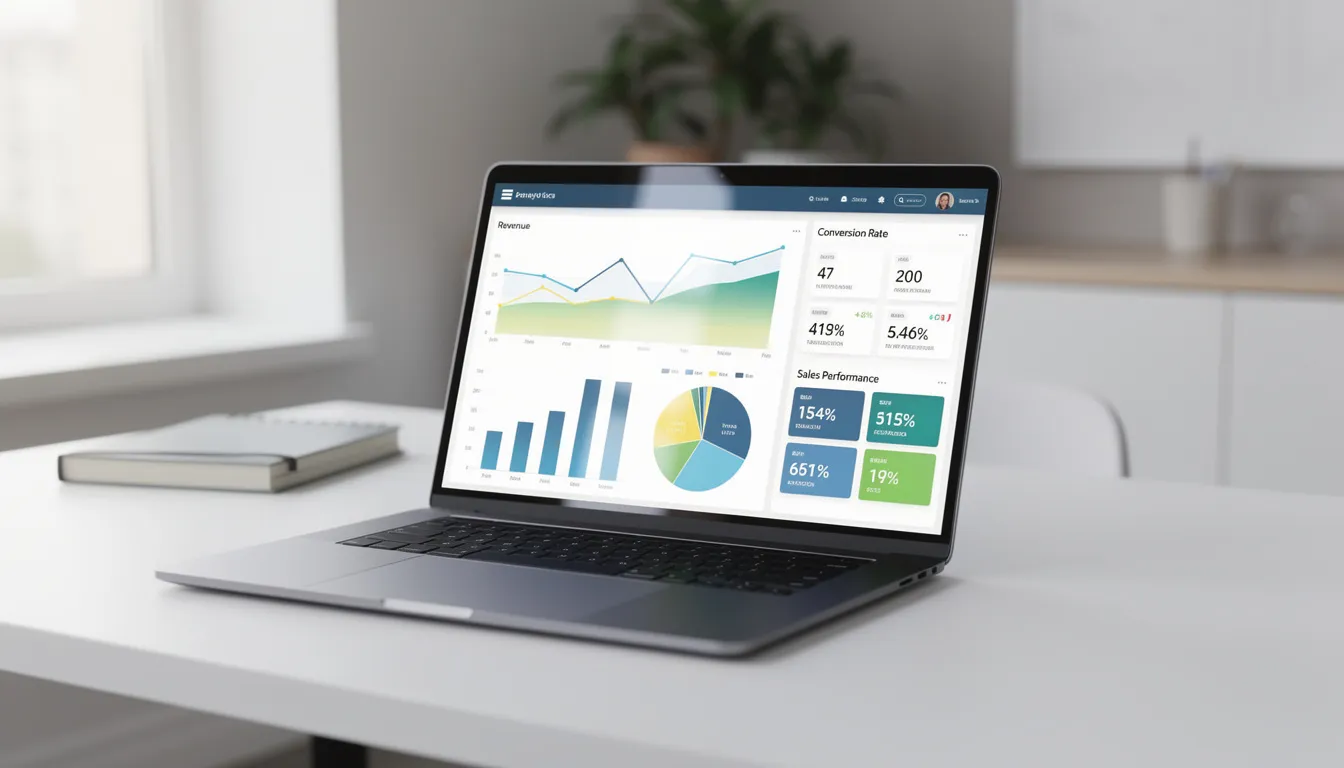
Tools and Systems That Enable Effective Remote CFO Work
Building reliable digital infrastructure makes remote CFO collaboration seamless.
Core Tool Categories
Category | Purpose | Common Options |
|---|---|---|
Cloud Accounting | Transaction processing, financial statements | QuickBooks Online, Xero, NetSuite |
FP&A / Budgeting | Forecasting, scenario planning | Excel, Google Sheets, Mosaic, Jirav |
Business Intelligence | Dashboards, KPI tracking | Power BI, Looker, Tableau |
Communication | Meetings, async updates | Zoom, Slack, Microsoft Teams |
Document Management | Contracts, policies, procedures | Google Drive, Dropbox, SharePoint |
Standardized Data Practices
- Consistent chart of accounts across entities
- Clean transaction coding with clear conventions
- Department and project tags for granular analysis
- Regular reconciliation cadence to maintain accuracy
Shared Documentation to Develop
- Living finance manual documenting policies and procedures
- Close calendar with deadlines and responsibilities
- Process checklists for recurring tasks
- Board and investor reporting templates
The goal is a simple, reliable infrastructure—not an overwhelming technology stack. Remote CFOs bring expertise in designing these systems, so don’t wait until everything is perfect before engaging one.